Honey rituals
Stir into warm tea, drizzle over yogurt, glaze roasted figs, or take a slow spoonful in the morning.
Why it’s good for youBatch Nº 07 · Summer harvest 2026
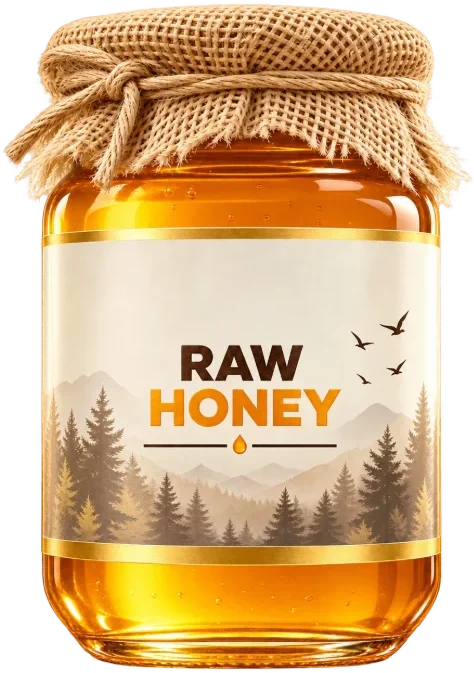
Premium raw honey, cold-extracted and jarred by hand from the meadows our bees call home.
Stir into warm tea, drizzle over yogurt, glaze roasted figs, or take a slow spoonful in the morning.
Why it’s good for youRaw honey keeps the pollen, enzymes and plant compounds that heat and fine filtering strip out. We leave them in, so every jar tastes of the flowers it came from.
Rich, rounded sweetness from fructose and glucose, with floral depth no refined sugar can copy.
Sweeter than sugar, so you use lessDarker, raw honeys carry more polyphenols and flavonoids, the same families found in berries and green tea.
Darker honey, more antioxidantsTea, dressings, marinades, baking, cheese boards and skincare masks. One jar covers the pantry and the bathroom shelf.
Kitchen · table · skinA spoonful in warm water soothes a dry throat, and honey’s natural enzymes have been valued for centuries.
A slow-morning stapleEach honey is graded on the Pfund scale, the beekeeper’s measure of color. Lighter honey tastes delicate and floral. Darker honey is bolder, maltier and richer in minerals.
Mellis began with twelve hives and one rule: the colony comes first.
Today we keep 140 hives across unsprayed wildflower meadows and acacia groves. We lift a frame only when the bees have sealed it, extract it cold, and let it settle for ten days before a single jar is filled.
Every batch is numbered, tested for moisture and traced back to its meadow.
Colonies move to meadows in bloom, away from roads and sprayed fields.
Nectar from clover, linden and wild thyme becomes honey in the comb.
Sealed cells mean ripe honey. A third stays behind for the colony’s winter.
Spun, never heated, then rested for ten days so it settles naturally.
Poured into glass, labelled with its meadow, harvest date and moisture reading.
Supermarket honey is often blended, heated and fine-filtered for shelf life. Ours is none of those things, and you can taste it.
The label lists one ingredient: honey. No syrups, no blending between batches.
A third of every hive’s honey stays with the colony so it winters on its own food.
Cold extraction keeps the aroma, enzymes and pollen that give each harvest its character.
No preservatives, flavorings or pasteurisation. Crystallizing is a sign it’s real.
The wildflower jar tastes like the end of June. I bake with it every week and my customers ask for it by name.
I didn’t know honey could have a vintage. Batch seven is darker and more caramel than the spring one, and I love both.
It crystallized after a month, which is how I knew it was real. Warm water bath, and it’s silk again.
Small batches sell out before the next bloom. Join the harvest list for first access, tasting notes and a note from the apiary each season.
Batch Nº 07 · Summer harvest 2026